9 hr
Chiang Mai Elephant Sanctuary, Waterfall & Bamboo Rafting
Spend a day with rescued elephants in their natural habitat, swim at a forest waterfall, and drift down the river on bamboo.
Reserve
Feed and bathe rescued elephants in their mountain habitat, conservation fees included
Hand-picked by our editors — only the best 5 experiences from 12 reviewed.
Verified partners for every tour, free cancellation where available, and instant confirmation on every booking.
9 hr
Spend a day with rescued elephants in their natural habitat, swim at a forest waterfall, and drift down the river on bamboo.
Reserve
24 hr
Thailand's highest peak, majestic waterfalls, royal pagodas, and hands-on time with rescued elephants
Reserve
7 hr
Spend a day caring for rescued elephants in their natural habitat, then cool off at a jungle waterfall
ReservePrices from verified partners. Availability updates in real time at checkout. Free cancellation policies apply where shown.
The landmarks, rooms, and views travelers on this tour remember — all visible on a single visit.
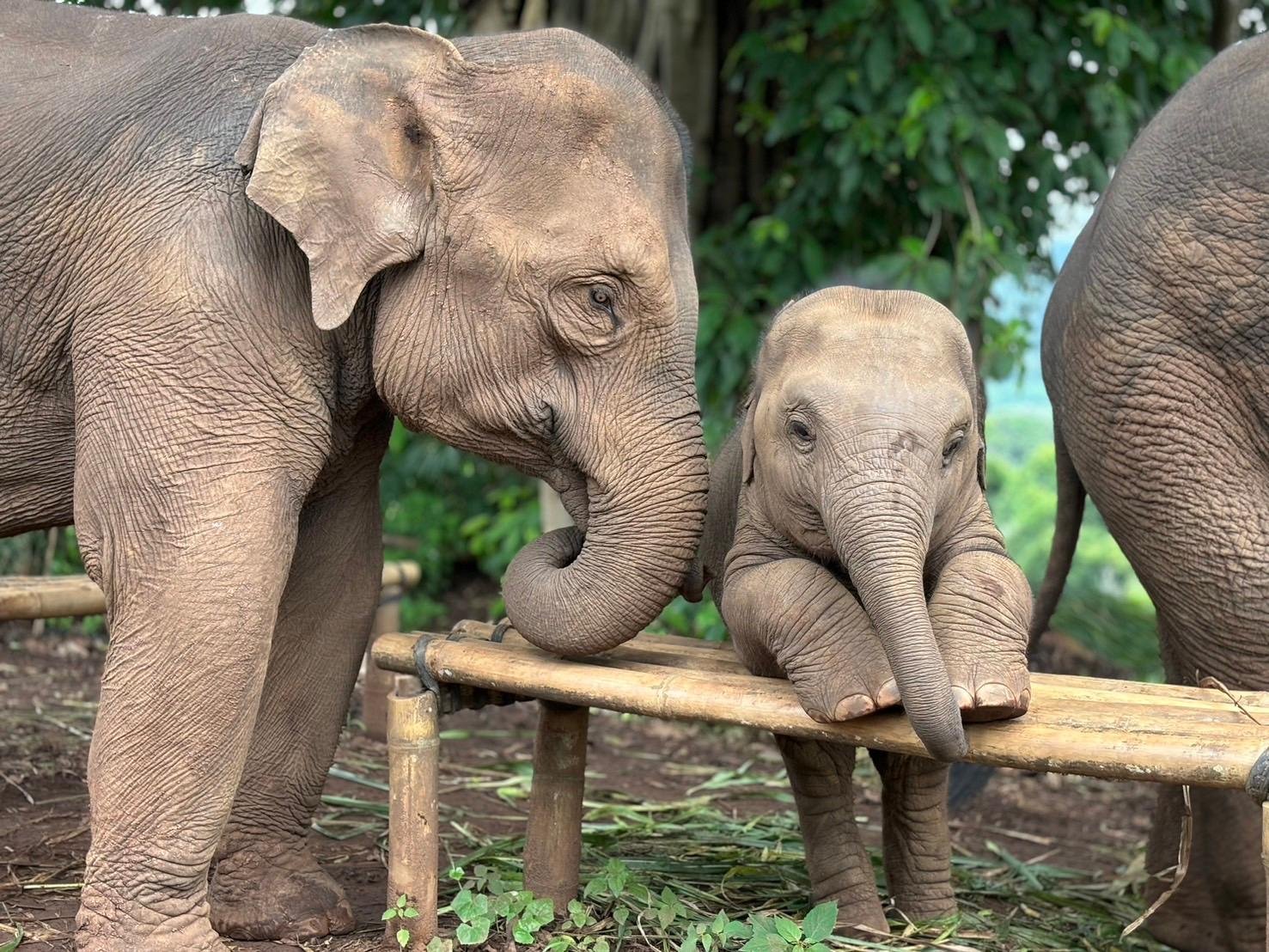
Observe the herd in their natural habitat while maintaining a respectful distance at the sanctuary.
These landmarks are located near the summit and offer expansive mountain views.
This iconic waterfall features a heavy mist and is a key stop for visitors.
Walk the highest point in Thailand, featuring a mossy cloud forest ecosystem.
Standalone hiking offers total freedom for independent travelers, while sanctuary tours provide structured wildlife interactions that simplify logistics for those managing doi inthanon elephant sanctuary prices tours.
| Feature | Top pick Sanctuary Tour | Standalone Hike |
|---|---|---|
Inclusions |
Guide, lunch, animal interaction | None |
Transportation |
Private van service included | Rental car or motorbike needed |
Flexibility |
Fixed schedule and group itinerary | Complete freedom to explore trails |
Average Cost |
2,500–4,500 THB per person | 300 THB entrance fee plus fuel |
Total Time Requirement |
8–10 hours | 4–8 hours |
Local Transit |
Hotel pickup and drop-off | Self-navigated mountain roads |
| See tickets → |
Verdict: Visitors seeking a curated experience with logistics handled should select a sanctuary package, whereas those prioritizing flexibility with doi inthanon elephant sanctuary prices tickets should choose the standalone trail exploration.
Choose your ticket, select your date, and reserve in under two minutes. Secure checkout handled by our verified partner.
Instant confirmation by email, with a mobile voucher you can save offline. No printing, no queuing at a collection desk.
Arrive at the entrance, show your voucher on your phone, and walk in. Most tickets include priority or skip-the-line access.
Practical details for your visit straight from our verified partners — hours, access, rules, and how to get there.
119 Ban Luang, Chom Thong
Main entry point for all arrivals.
Rental vehicles provide the most flexibility for reaching the park entrance.
Private taxi services can be hired from Chiang Mai for a full day.
Dress modestly as this is a nature-focused area near religious sites. Comfortable walking shoes and breathable clothing are recommended for navigating Doi Inthanon National Park.
Small daypacks are acceptable for carrying personal items. Security personnel operate at the park entrance where you pay the 300 THB conservation fee.
Photography is permitted throughout the park. Please maintain a respectful distance from animals and do not use flash near wildlife.
Due to the rugged mountain terrain, many trails are not wheelchair accessible. Visitors should be prepared for steep paths and unpaved sections.
Mobile reception is inconsistent in the dense forest areas. Offline maps are recommended for navigating to the Doi Inthanon National Park entrance.
The area is suitable for older children who can handle hiking. Ensure minors are supervised at all times when near water or wildlife.
Limited dining options are available near the entrance. It is recommended to bring sufficient water and snacks for your visit to doi inthanon elephant sanctuary prices locations.
Pets are strictly prohibited within the sanctuary and park boundaries to protect local wildlife. Please make arrangements for pet care before arriving.
Always follow the guidance of your local guide to ensure safety. Respect the environment by practicing leave-no-trace principles during your visit.
Best time to go, insider tips, nearby landmarks, and the cancellation fine print — flip through to skim what matters to you.
How crowds, weather, and events shift across the year.
March to May is hot and dry, making it easier to navigate trails.
June to August brings the monsoon season with lush green scenery.
September to November offers comfortable temperatures and clear skies.
December to February is the peak season for cool weather at the summit.
Small details that turn a good visit into a great one.
Arrive between 06:00–09:00 to avoid mid-day crowds and enjoy cooler mountain temperatures for hiking.
Keep cash on hand for the 300 THB conservation fee as cards may not be accepted at the gate.
Wear sturdy hiking boots, as the ground in these Doi Inthanon elephant sanctuary prices tours can be muddy.
Mountain weather changes quickly, so bring a light jacket even if it feels warm at the base.
Do not attempt to ride the elephants, as ethical sanctuary practices focus on observation only.
Non-bookable sights within a short walk — free to visit, easy to pair.
A large, powerful waterfall accessible by a short path.
Stunning twin pagodas situated at the highest peak.
A local village known for its terraced rice paddies.
A picturesque waterfall tucked away in the forest.
Flexible, no hidden fees.
Full refunds are typically available for cancellations made at least 24 hours in advance. Please note that the 300 THB conservation fee per foreign adult paid at the national park gate is non-refundable.
Hand-picked options within walking distance — pick a district for vibe, or a specific hotel for convenience.
Comfortable lodging located near the park entrance.
Secluded mountain lodge with scenic views.
Full-service hotels for those staying in the city.
The elephants living in sanctuaries near Doi Inthanon National Park are survivors of logging operations that ended across Thailand in 1989, when a catastrophic monsoon flood linked to deforestation killed hundreds and prompted a nationwide timber ban. Mahouts who had worked alongside these animals for decades found themselves without income, and many elephants were sold to tourist camps where riding and performances became the norm. In the early 2000s, a handful of conservationists began purchasing retired elephants and relocating them to forested land along the Mae Wang river valley, establishing sanctuaries that prioritize observation, feeding, and bathing over direct-contact entertainment. Today, the sanctuaries clustered between Chom Thong and the national park entrance provide refuge for roughly forty elephants, most of them females in their thirties and forties who spent their working years hauling teak logs from mountainsides. Doi inthanon elephant sanctuary prices reflect the operational costs of maintaining large herbivores in semi-wild conditions. An adult elephant consumes between 150 and 200 kilograms of vegetation daily, including bananas, sugarcane, pumpkins, and bamboo shoots sourced from nearby farms. Sanctuary operators pay veterinary fees, land leases, and mahout salaries, and many contribute a portion of visitor fees to anti-poaching patrols and habitat restoration projects within the national park. The 300-baht conservation fee collected at the park gate funds trail maintenance, ranger stations, and the protection of wild elephant corridors that still exist in the park's northern reaches, though sightings of truly wild herds are rare and occur mostly at dawn near the Pha Dok Siew nature trail. Visitors selecting elephant sanctuary tour packages typically spend two to three hours at a single site, learning to prepare food bundles, hand-feeding adults and juveniles, and wading into shallow pools where elephants roll and spray. The experiences avoid howdahs, bullhooks, and tricks, instead emphasizing proximity and participation in daily care routines. Most sanctuaries operate on private land adjacent to the national park boundary, meaning access does not require the park entrance fee unless the itinerary includes stops at waterfalls or summit viewpoints. The Mae Wang valley sits at 800 meters elevation, significantly lower than the 2,565-meter Doi Inthanon summit, so temperatures remain warm year-round and the landscape is a mix of teak forest, banana groves, and terraced rice paddies rather than the mossy cloud forest found higher up. Seasonal variations matter: the cool season from November through February draws the largest crowds, while the monsoon months of July and August bring afternoon rains that turn sanctuary grounds muddy and limit photography but provide elephants with the standing water they favor for bathing.

"An adult elephant consumes between 150 and 200 kilograms of vegetation daily, including bananas, sugarcane, pumpkins, and bamboo shoots sourced from nearby farms."
A step-by-step walkthrough of the visit — what you'll see, how long each stage takes, and the details that matter.
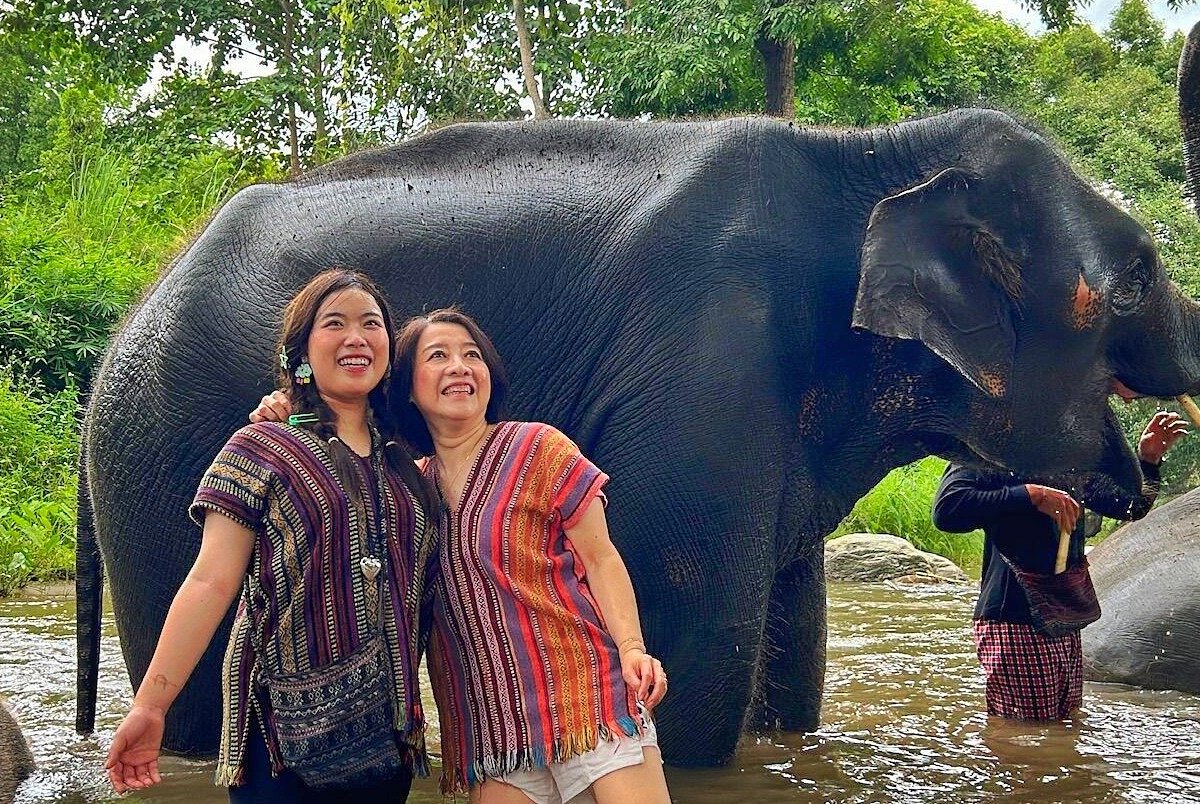
You arrive at the sanctuary mid-morning, when the elephants are foraging in the shade of banana trees, their trunks curling around fruit bundles left by mahouts an hour earlier. A guide hands you a woven basket filled with sugarcane stalks and pumpkin slices, and you approach the herd slowly, holding the food at arm's length. The matriarch, a forty-two-year-old female named Bua Thong, extends her trunk and plucks the pumpkin from your palm with surprising gentleness, her skin rough and warm under your fingertips. You spend twenty minutes feeding the group, learning to distinguish individuals by the shape of their ears and the scars on their foreheads. After the feeding session, you follow the elephants downhill to a concrete pool fed by a diverted stream. The mahouts wade in first, splashing water over the elephants' backs, and you join them, using a plastic bucket to rinse mud from Bua Thong's shoulders while she submerges her trunk and sprays you in return. The water is cool and opaque with sediment. You stay in the pool for thirty minutes, watching juveniles play and roll, their movements slow and deliberate. Before you leave, the guide explains that Bua Thong was a logging elephant until 2003, and the notch in her left ear is a brand from her previous owner.
The park operates from 05:30–18:30 daily. You should plan your visit to the Doi Inthanon National Park accordingly.
The 300 THB conservation fee is a mandatory charge per foreign adult paid directly at the park gate, and it is usually separate from doi inthanon elephant sanctuary prices tour costs.
The best arrival window is 06:00–09:00 to avoid mid-day crowds and enjoy cooler mountain temperatures.
You are encouraged to bring water and snacks, though please dispose of all waste properly in Doi Inthanon National Park.
There are no formal locker facilities, so please keep valuables secure with you at the sanctuary.
The terrain is mountainous and often steep, making parts of the sanctuary challenging for those with limited mobility.
Full refunds for tours are generally available 24 hours prior, excluding the 300 THB conservation fee paid at the park gate.
Parking is generally available at designated spots, though check with your specific operator for any local parking fees.
Photography is welcome, but please ensure you maintain a respectful distance from the animals during your visit.
Yes, families are welcome, but children should be supervised closely due to the natural environment and proximity to wildlife.